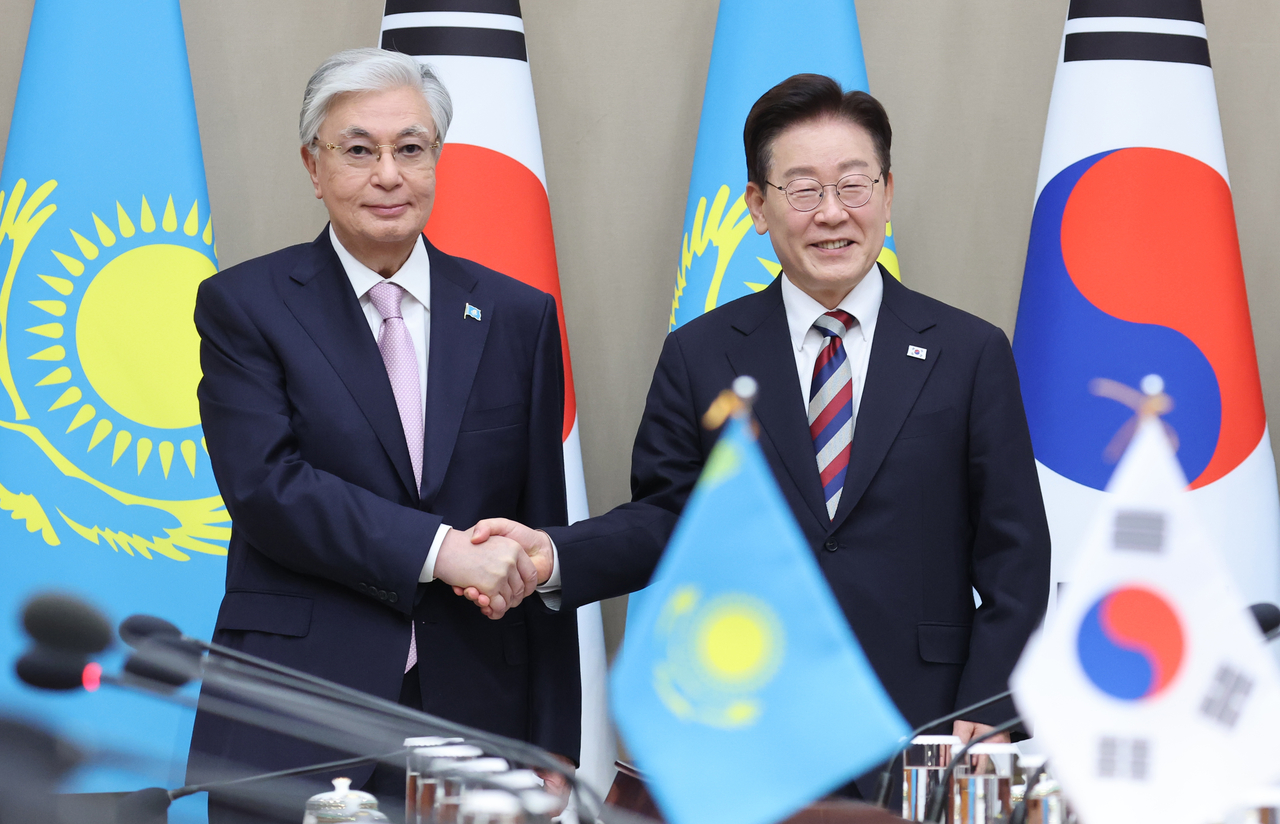
South Korea and Kazakhstan agreed to elevate their relations to a future-oriented comprehensive strategic partnership, while laying the groundwork for deeper cooperation in energy security, critical minerals and nuclear energy.
President Lee Jae Myung and Kazakh President Kassym-Jomart Tokayev reached the agreement during a summit Tuesday in Seoul as Tokayev made a state visit ahead of Wednesday’s inaugural summit between South Korea and the five Central Asian nations.
The elevation marks the first upgrade in bilateral relations since the two countries established a strategic partnership in 2009.
“The two leaders agreed to use the elevation as an opportunity to develop cooperation, previously centered on trade and investment, into a more strategic and future-oriented partnership encompassing economic security, advanced industries, science and technology, and people-to-people exchanges,” senior presidential spokesperson Kang Yu-jung said in a statement on the summit outcomes.
In particular, Lee and Tokayev agreed to “significantly strengthen strategic cooperation in economic security, including energy and critical minerals.”
That includes exploring joint development of energy resources and expanding supply chain cooperation by linking Kazakhstan’s abundant critical mineral resources with Korea’s advanced processing and manufacturing capabilities.
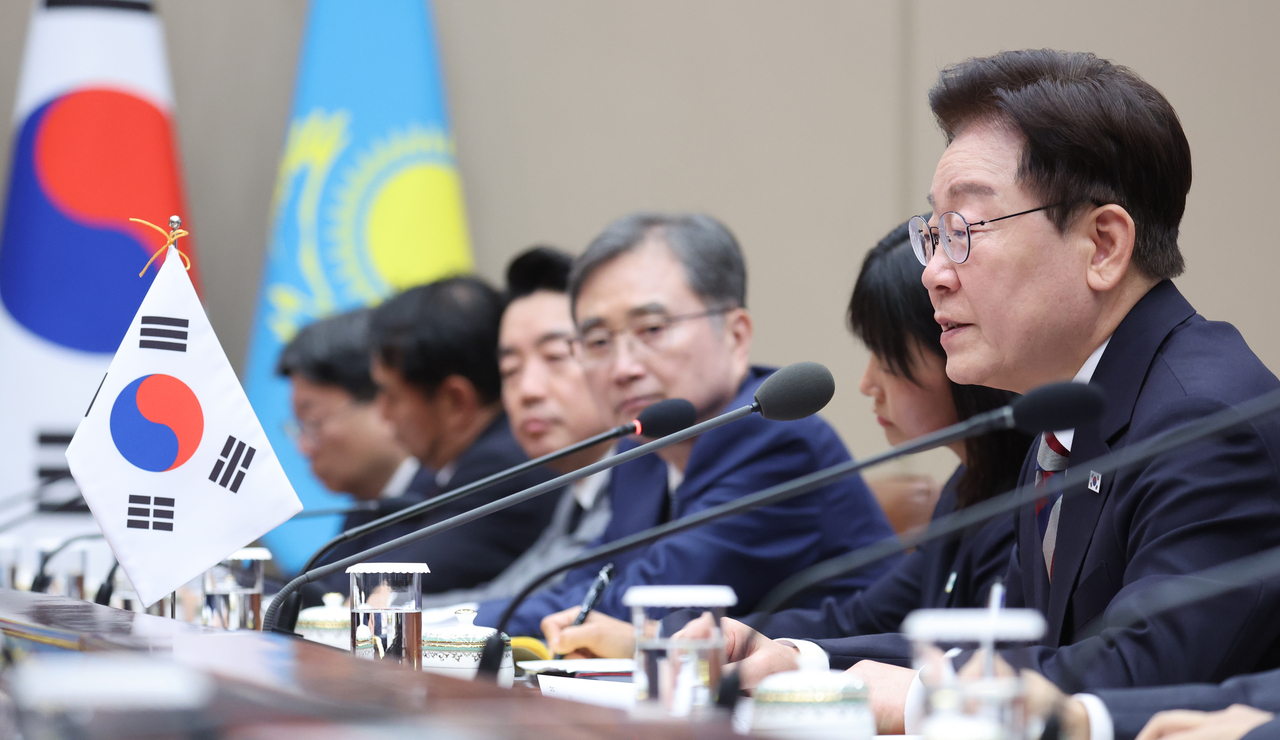
During the summit, Lee underscored the importance of the Seoul-Astana partnership as the international community navigates geopolitical tensions, shifting supply chains, transnational crime and mounting energy security risks.
“In this situation, reliable partners in the international community have become more important than ever in order to increase resilience to external shocks and secure a foundation for sustainable growth,” Lee said.
“Kazakhstan is not only a country rich in energy and resources, but also an important partner for the Republic of Korea in the field of economic security, with great potential in future advanced industries,” he added, referring to South Korea by its official name.
Lee cast South Korea as a capable partner that could contribute to advancing Kazakhstan’s industries and technologies through its strengths in advanced manufacturing and digital technology.
“I hope our two countries will strengthen cooperation amid the uncertain international situation, connect each other’s strengths and potential, and discover new opportunities for mutually beneficial shared growth,” Lee said.
Lee said the summit would mark the elevation of bilateral ties to a future-oriented comprehensive strategic partnership and pledged to “further deepen cooperation between our two countries.”
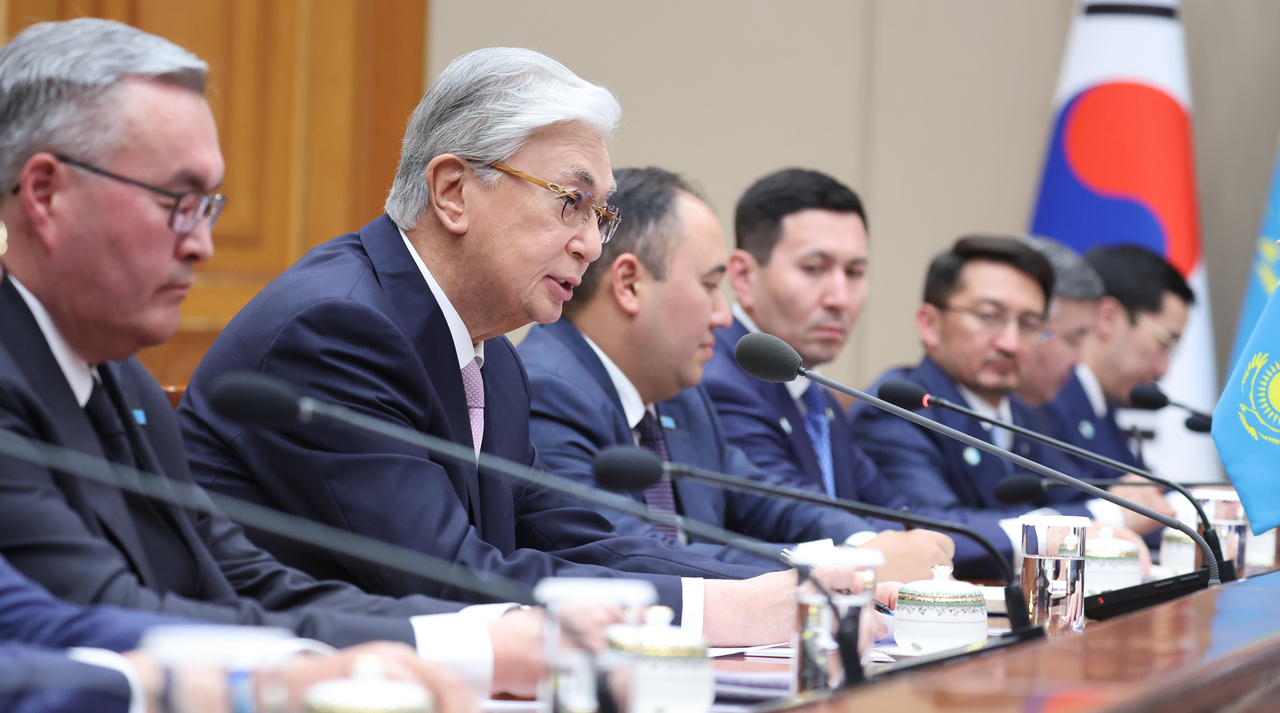
Tokayev, in turn, said the summit with Lee held “truly special significance.”
“Kazakhstan and the Republic of Korea are strategic partners. And relations between our two countries are developing at an unprecedented pace,” he said.
Tokayev said the decision to elevate ties reflected the strong momentum in bilateral relations, pointing to tangible achievements across a range of areas.
He added the upgraded partnership reflected growing momentum in bilateral ties, citing some $12 billion in South Korean accumulated investment, the expanding presence of Korean businesses, and deepening cultural and educational ties.
In particular, Tokayev highlighted bilateral cooperation on the development of the new smart city of Alatau, which includes plans to establish a KAIST branch campus.
Oil, nuclear energy deals take center stage
Following the summit, the two leaders oversaw the exchange of 13 government-level agreements and memorandums of understanding. Led by deals on crude oil and nuclear energy, the agreements also covered science and technology, labor, infrastructure, future mobility, clean energy and climate cooperation.
Energy cooperation emerged as a key focus, with the two sides signing a framework arrangement on oil cooperation to give more concrete shape to efforts to diversify and stabilize South Korea’s crude supplies.
The arrangement follows Kazakhstan’s move in April, during a visit by a South Korean presidential delegation led by chief of staff Kang Hoon-sik, to pursue the supply of 18 million barrels of Kazakh crude to South Korea.
The agreement covers supplies of Kazakh crude, including oil produced by Korea National Oil Corporation, as well as joint geological exploration, oil and gas field development, petrochemical research and workforce training.
The push has gained urgency since the outbreak of the Iran war disrupted traffic through the Strait of Hormuz. Roughly 70 percent of South Korea’s imported crude passes through the waterway, making it a critical chokepoint for the country’s energy security.
The two countries also signed two nuclear energy MOUs, one laying the groundwork for broader cooperation in reactor technology and Kazakhstan’s planned nuclear power plant construction projects, and the other focused on securing stable nuclear fuel supplies.
The first agreement calls for joint research and development on nuclear power plants and small modular reactors, exchanges on nuclear industry policy, technical cooperation on nuclear and radiation safety, and training for scientists and engineers.
Cheong Wa Dae explained the MOU would establish a broad framework for cooperation across the nuclear sector and help create opportunities for South Korean companies to take part in Kazakhstan’s planned nuclear power plant construction projects.
Kazakhstan is turning to nuclear power as it seeks to address persistent electricity shortages and expand its generating capacity.
The second MOU focuses on securing stable nuclear fuel supplies. It calls for closer cooperation on nuclear fuel supply chains, along with exchanges on nuclear programs and safety, and cooperation in nuclear research and workforce development.
For South Korea, which relies on imports for uranium used in its nuclear power sector, closer ties with Kazakhstan, a major global uranium producer, could help stabilize nuclear fuel supplies and strengthen energy security.
Cheong Wa Dae said the agreement would reinforce the foundation for nuclear fuel supply chain cooperation with Kazakhstan while broadening bilateral nuclear cooperation.
dagyumji@heraldcorp.com